

Canadian Roots
How Disease and Religion Shaped our Family

When my uncle Donald was studying to become a Jesuit, he received a visit from his father, my grandfather. Alphonse Paré was born in Lachine but moved to Manitoba as a very young child. His father was a doctor, and his mother was sick with tuberculosis. My great-grandfather, Dr. Louis Paré, had been west twice before, once right out of medical school when he was sent there to see to his younger brother Théophile, who was studying for the priesthood and had fallen ill. The young doctor concluded that his brother needed a nurse to look after him. He found and hired Angélique Nolan, then left immediately to be back in Matawa, Ontario for his own wedding. Théophile recovered, changed his life, and married Angélique Nolan, a member of a large and important Métis family.
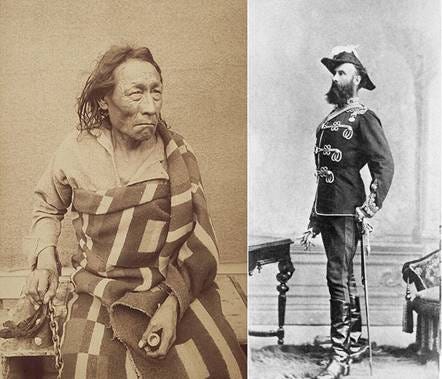
The doctor’s second visit was the year my grandfather, his fifth child, was born. Doctor Paré had been called up with the 65th Militia in that extraordinary year, 1885, the year of the Métis uprising, Louis Riel, and the smallpox plague that caused Montreal to be quarantined. He was asked to go west because his militia superior had been begged to lead the fight against smallpox in Montreal. Doctor Paré and the militia took the train to Calgary where they met General Thomas Bland Strange and his other militia units. They marched up to Edmonton, then followed the North Saskatchewan River to stand up to Big Bear, Mistahimaskwa, a Plains Cree chief. Both forces, General Strange’s and Big Bear’s Cree, were careful about the safety of their men when they engaged at Frenchman’s Butte in late May 1885. Towards the end of their last skirmish, General Strange discovered that his men had withdrawn so quickly that they had left an injured man still in range of the Cree guns. He was shocked that they had left a fellow soldier to die because they feared for their own safety. He looked for volunteers to accompany him, Dr. Paré and the chaplain to rescue the injured man. The rescue crew found the man and needed to carry him back under fire. Dr. Paré checked him over and made sure he was comfortably installed on a stretcher, but the chaplain took so long with the Last Rites that the general lost patience and told them to get on with the rescue. Halfway up the hill, the rear carrier lost his nerve and the general himself took over that role. War was different in those days; people mattered. They carried the injured man to safety, and they ultimately lost only one soldier, and that was to illness. The battle ended in a draw.
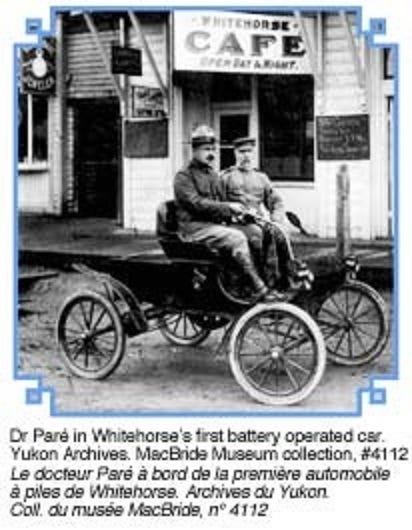
When Dr. Paré returned to Lachine, he discovered that his wife, Josephine, was ill with tuberculosis. Dr. Paré was a modern man, an agnostic, who could have been comfortable in conversations today. He had likely heard of Hermann Brehmner’s rest cure for tuberculosis and determined to move Josephine to the clean air of the countryside to take the cure in the cool country air. He applied to become a doctor with the North-West Mounted Police, and by 1888 had moved to the Prairies with his wife and children. It was too late, though, and Josephine soon died.
Dr. Paré sent two of his daughters back to their aunts, both religious sisters, in Lachine. His eldest daughter and son as well as the baby, my grandfather, became a part of his brother Theophile and Angélique Nolan’s family. Dr. Paré could not really parent his children with the demands of his work. As a doctor, his schedule was not predictable. The children must have come to see him more as a doting visitor while his own parenting skills were directed toward his responsibilities to the policemen. Indigenous families who came to see him were not a part of his obligations as a police doctor but were a part of his medical oath. The NWMP records compared him to the Oblate priest, Father Albert Lacombe, one of the most important missionaries of the region, but Louis Paré always saw himself as a modern man.
My grandfather and his older brother Alfred grew up with Angélique, their cousin Marie and their eldest sister Noémie. Alphonse was by far the youngest, growing up learning Cree and Ojibwa with no memories of Lachine. His friends were Indigenous and their deeply Catholic life involved schooling, canoeing and horseback riding. It was the horseback riding that helped him gain admission to the Royal Military College.
Most of the foregoing was not common knowledge in the family when my uncle received his father’s visit at the Jesuit college. My grandmother, Lucy, told the story in her memoirs.
“An elderly Jesuit arrived because he had heard Alphonse was visiting. Father
Richard, S.J. was 100 years old and blind. He had been a missionary priest among the Indians in his younger days, travelling mostly throughout Northwest Canada and in the Yukon. He greeted Alphonse in English and my husband responded in French. This delighted the old man, and for a joke he said a few words in the Ojibway Indian dialect. (It seems that he had even published a dictionary of the Indian language.) Alphonse answered immediately in Cree which he had learned in his youth. The old man was so excited he threw his arms around my husband and embraced him. They talked away together for three whole hours comparing notes of their experiences in the Far North of Canada and discovered that they had often crossed each other’s paths in the wilderness over the years without ever meeting one another.”
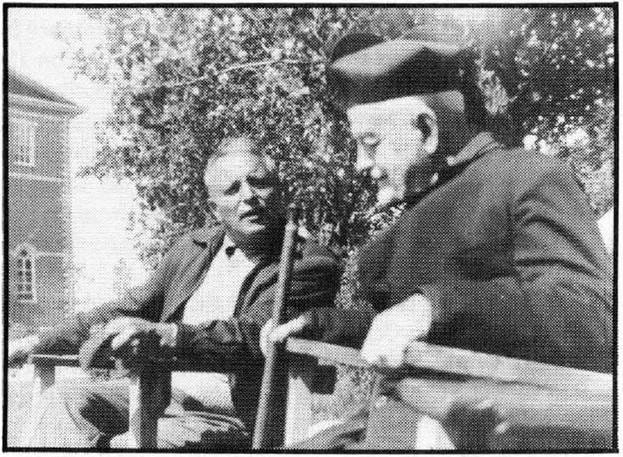
This incident was eventually shared in my grandmother’s memoir, The Seeds, published in 1984. We were all impressed. We did not know Alphonse spoke two Indigenous languages. No doubt my grandfather was proud of this Indigenous connection in his past, but it was in his past and he had died nearly 30 years before the book appeared. Until then, the family had never learned about it, but it did show how, despite his own father’s lack of religious observance, Alphonse was a deeply believing Catholic who proudly visited his own son, a Jesuit in training. Alphonse’s cousin Marie, Angélique Nolan’s daughter, became a nun, and after Angélique died Théophile finally joined the priesthood.
Great history Joseph, so interesting, a keeper
Thank you
Such a fascinating collage of stories, skillfully captured by the seemingly self-contradictory title. Each story cries out for its own separate elaboration. Over to you, Joe! And thank you.