

Rascals of the Province
David Pattee Fights Back

After the 1820 election results in Prescott and Russell Counties revealed William Hamilton to be the winner, his brother George wasted no time in trying to sabotage the reputations of those officials who had supported the opponent, David Pattee. He knew that Pattee would contest the results and he had an urgent need to publicly discredit as many of Pattee’s allies as he could. If he succeeded, then Pattee’s petition to contest would likely be rejected.
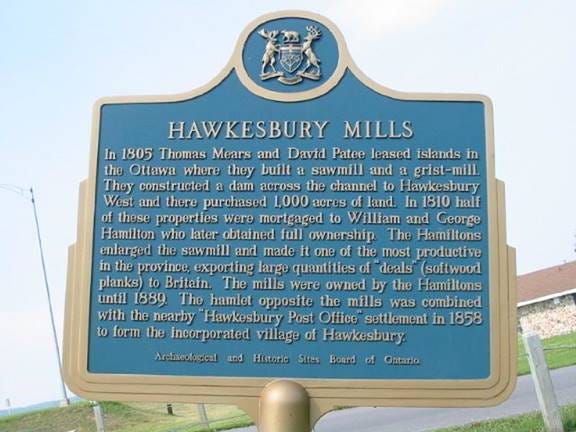
During the last days of the election, he had promoted a story that Pattee had been accused of forgery in New Hampshire 17 years earlier. As one of the largest employers in the area, he had also put a lot of pressure on voters to come out for his brother William. If you were an employee of the Hamilton Brothers and you had the right to vote, they would be watching how you voted. There was no secret ballot as we have today. Your vote was public and visible.
Cornwallis Joseph Fortune was the returning officer. Son of an Irish Loyalist from South Carolina for whom Pointe Fortune is named, he fought in the War of 1812. He served in the militia with George Hamilton and was a part of the elite associated with the Family Compact. Like many members of this group, he must have felt very conflicted at the idea that an American immigrant could be elected to the Assembly of Upper Canada. Worse yet, Pattee argued that the people should have power through their elected officials, a radical, republican notion.
It is hard to imagine today, but there were two very different types of immigrants from the Thirteen Colonies. Many British Loyalists, like the Fortunes, had first gone to the rebelling colonies in the decade leading up to the war. Cornwallis Joseph’s family arrived in South Carolina in 1766 and he was born there in 1773. Most of these Loyalists moved to the remaining British colonies during the American War of Independence, rejecting their new American home because it was fighting with the mother country, a place that was still very much a part of their lives. A second wave, economic immigrants, arrived well after the war was over. Their formative years had been spent in the newly-created United States. David Pattee was a classic example. Only five years younger than Joseph Fortune, he spent the first 25 years of his life in New Hampshire, steeped in the democratic notion that the people elected a government.
The two sets of immigrants, Loyalist and economic, had little reason to get along. Even the atmosphere during the 1820 election was still filled with figurative smoke from the War of 1812, during which immigrants like Pattee and Thomas Mears had to declare their loyalty to the King – and were not believed.
Fortune had risen to the rank of colonel fighting the Americans during the War of 1812. Many influences predisposed him to see Pattee as someone who had to be stopped in order to protect Upper Canada. The executive government, taking its orders from Great Britain, was the proper way to govern – not the Assembly, taking its orders from the people. The British Colonial Office had inherited the assembly structure from the Virginia Company that created the concept simply to control a rowdy bunch of employees and settlers centuries earlier. It was never intended to be the government.
Fortune destroyed and miscounted enough ballots to prove William Hamilton the winner, and George Hamilton sent a messenger to Goffston, New Hampshire to get proof of the documents that showed Pattee had been accused of forgery.
It is a credit to Attorney General John Beverley Robinson that Pattee received a fair hearing. Robinson was among the staunchest conservatives in the Family Compact and he had little use for the likes of Pattee and others whom he described as forming the “scum” and “the rascals of the province.” Ultimately fair-minded, he dismissed much of the slander generated by the Hamiltons, leaving only the charge of “forgery and uttering counterfeit banknotes.” Pattee, a modest and sincere man, wrote in his own defence that a felon who was bargaining his own terms with the State of New Hampshire had falsely accused him. Pattee also added that he was not guaranteed any kind of immunity to return to clear his name. Even so, he showed that he had made good on the debts he had incurred in New Hampshire and he promised to resign immediately if the Assembly found fault in what he had done. He further asked, though, that the Assembly not “gratify the Spirit of Revenge and persecution” that he perceived as driving his opponents in their slander of him and his supporters.
For their part, the Hamiltons needed all the influence they could muster to keep their business afloat. They had built a much larger mill than their predecessors had left them and they were seriously extended on all fronts. Their illegal cutting operations on Crown Land was an offence that, should he stand accused, would have to be heard in the very court where George Hamilton sat as a judge. Simultaneously, they were painfully aware that their brother Robert, charged with finding the investments to keep them afloat, had signed guarantees against their property with Gillespie, Moffatt and Company, a firm with branches in both London and Montreal.
The Assembly’s decision is recorded as a rebuke of George Hamilton. It rejected his claims about Pattee and stated that Hamilton’s argument did not demonstrate “…such Proof of Guilt of the Charge of forgery as to weigh against or outweigh eighteen years of irreproachable Conduct in this Province as certified by so many respectable Inhabitants.” The seat was awarded to Pattee, Joseph Fortune slipped discretely into Argenteuil Township and George Hamilton’s bad luck was only just beginning.