

Snye Carty
Ongoing adventures on the Ottawa River

Thomas Mears was driven by challenges. Leaving home in Massachusetts to design and build a grist mill on the North River for Patrick Murray, the seigneur of Argenteuil, he could not tear himself from the untouched potential of the Ottawa Valley. He reached out to some friends from home and told them he could help them build another mill, this time across the river. Murray was only too happy to lease them the land. The new mill would be for paper and would help develop the seigneurie. Walter Ware grew up in his father’s mill in Massachusetts, and he knew how to find backing for the project. Together they built Canada’s first paper mill, beginning operations in 1804, but once it was completed, Mears was restless again.
Mears had had a chance to explore, but even knowing that he should settle down, start a farm, do things for himself, he could not resist the flow of the Ottawa River that ran around an island just off the west bank, the side recently named Upper Canada. The whole area was in unexplored, unsubscribed territory. By 1805 he had acquired land along the shore of a passageway called the Chenail écarté (remote channel), a name that evoked the isolation of the area. Colonization was only beginning. He met another expat, David Pattee, who was starting to homestead. Mears figured that a mill could span the channel with a foundation on each side of the fast-moving current. Watching the unwieldy Columbo, Philemon Wright’s log raft, drift by on the Ottawa River, piloted to the extent it could be controlled in 1806, he saw the added advantage of not being exposed to the broad river’s often drifting traffic. He knew the British needed the Algonquin forest to build ships and masts – oak and pine – for their warships, but he did not have a great quantity of standing massive timber to send off. A sawmill, however, could cash in on the bonanza. Napoleon had blocked the British from the Baltic Sea and Russia while the Americans had sided with France. Searching the world, this was one of the factors that brought the British Navy to Australia where they discovered an island with tall, straight pine trees. Called Norfolk Island today, it looked to be the answer to the blockade. The mainmast of a Man-o’-war stood straight – 100 feet high, three feet in diameter at its base. Such a pine mast had to bend in the wind…but the Norfolk Island pines snapped.
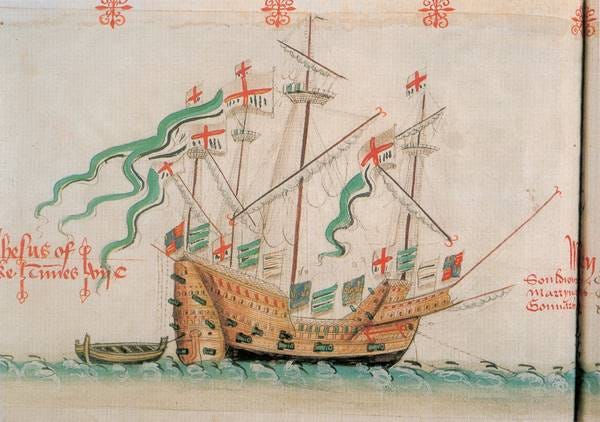
Each ship required 20 smaller pines for masts and spars. The ships were made from oak, dense and heavy, that had to be floated down from the ancient, cultivated Algonquin forests to Quebec City, carried by the pine. Huge rafts floated past on the main part of the river but the island protected Chenail écarté from these dominant, inhabited wooden floating islands.
Mears told Pattee about the channel and how they could harness the flow. To build the mill, he had to acquire two islands to anchor their structure on either side of the racing current. They bought the islands from the seigneury and leased them from the Nipissing and Algonquin. Both seigniorial and Indigenous jurisdictions had to be respected. Indigenous Nations could lease their land, but many colonists who signed leases with them had chosen to ignore Indigenous rights, and eventually the leases, too, were ignored. Mears figured he would need to build footings on the islands. He offered to help set up a lease, and the Indigenous parties accepted. Mears and Pattee respected the lease, but they were among the minority. Most colonists who signed leases later defaulted without justification. The colonists resented having to pay the “Indians” for usage of the land.
Mears felt that the flow could support a sawmill, but he knew they would have to start with a gristmill for the homesteaders establishing in Prescott County.
Their mill was a success and the English-speaking workers and settlers that used it called the area Snye Carty, in their attempts to pronounce the French name, but the term snye spread into the English language to describe a channel. The colloquial name might have stuck as a placename in some form if the colonial authorities had not seen fit to honour Baron Hawkesbury, Earl of Liverpool instead. Since farmers coming to a gristmill were usually short of currency to pay for the service, the miller would often accept payment in other forms. This did not help the miller pay for machinery manufactured and imported from Great Britain and elsewhere. For Pattee and Mears, real success was not to be achieved in operating the gristmill but in the more ambitious sawmill where they could trade in the big leagues and be paid in some form of one of the currencies in use. We have become so comfortable with our monetary system that we have trouble imagining the problems confronting a couple of entrepreneurs like Pattee and Mears. There was no paper money — the most common coins in the United States were still the Spanish and Spanish-American dollars. These round, almost pure silver disks could be broken into 8 bits and had been the closest thing to an international currency for two centuries, but in the Ottawa Valley in the early 1800s there was competition from the pound sterling and the Louis remaining from the French regime. It would not be until after the War of 1812, when the British government conscientiously redeemed army bills at full face-value, that people began to have confidence in paper currency, giving rise to banking and credit. All these changes came too late for Pattee and Mears. Short of funds and lacking credit or other backing, they negotiated with the Hamilton brothers who had recently acquired a wharf in the Seigneurie of Lauzon, near Quebec, which they dubbed New Liverpool Cove. The Hamilton brothers, Scots-Irish, relied on one family member established in Liverpool, and traded wines, nails, Baltic timber and other products. As brokers and underwriters, they had contacts in London and Aberdeen as well. Having been shut out of the Baltic by the Napoleonic blockade, they realized that the Royal Navy would become increasingly dependent upon timber coming to Quebec City from outlying areas like the Ottawa Valley. Ruthless British businessmen with excellent contacts, they happily advanced Pattee and Mears payment in anticipation of delivery of timber and ‘deals,’ the word used for certain sawn lumber needed in shipbuilding. They also insisted the mill owners sign an obligation against their mill if they failed to deliver.
Some texts say that the Hamiltons bought the large sawmill and generously describe the rise of the Hamilton dynasty. Others describe the antagonism that existed between the parties over the following decades. In 1811, the war with Napoleon was still driving up the value of timber, but that did not facilitate credit. At the same time, the Americans were sabre-rattling and the local American community in the British colonies was suspect, especially in the eyes of the Tory elite. George and William Hamilton, with their financial connections in Liverpool, had been quickly welcomed into this upper-crust society, but Pattee and Mears were part of the republican-tainted American immigrant community. These expatriates were members of a large group of rough, working-class colonists with their own understanding of loyalty and justice. The Hamiltons saw them as expendable, and when they missed a delivery, they had a legal argument to foreclose. Justice and fairness could be expressed in many ways: Shortly after the Hamiltons took possession of the Mears and Pattee mill at Snye Carty, it burned to the ground. The partners were never blamed for it, but one of their employees was suspected.