

The Blue Axe
As the ice receded

This story has been written in response to an inquiry about understanding the times during which the Algonquian and Iroquoian peoples slowly established themselves on the area that opened up as the Laurentide Ice Sheet receded. It is best to understand and view such enormous events in the context of a broader world, as the ice sheets receded from North America and northern Europe 10,000 years ago and to follow the timeline of both continents simultaneously.
History is marked through time by human-constructed mounds and monuments. These indicate the signs of civilizations, each one failing and leaving a record in stone structures or large, human-made mounds. Because the frequency of these artifacts becomes more continuous as we approach the present, we assume that we live in the society that these artifacts were building towards. We pride ourselves on this long history. The ancient Greeks are often perceived as the beginning of civilization and the Old Testament is often considered to be even older than that. We know now, though, that before those times there were more ancient peoples in the Middle East, with Sumer predating Jesus Christ by over 6000 years and preceding the building of the Second Temple in Jerusalem by 5500 years. No-one seems to know how old Egypt really is, with the Sphinx and the pyramids potentially having been built at two greatly separated times, and if you accept that the Great Pyramid dates to 4600 years ago, some contend that the Great Sphinx has art styles in common with Göbeklitepe, built in the region of the Sumer people 6000 years before that. The date given for Göbekli Tepe puts it at ten thousand years ago, well before our concept of written history began.

Is it possible that we are interpreting this long historical period incorrectly? Could it be that the monumental structures, the mounds and the pyramids should be interpreted differently? Is it possible that they are demonstrating a problem, a breakdown of the smooth flow of life?
China and India both fit into that 10,000-year timeline, developing sometime in the last ten thousand years. Back then, the glaciers were receding from northern Eurasia and North America. The forests and their richly varied inhabitants expanded north as the Laurentide Ice Sheet retreated from the last glacial maximum across the Northern Hemisphere. They each brought human elements along with their human social constructs. Those moving into the expanding lands as the Laurentide Ice Sheet receded brought with them a social construct that lived in an interdependent relationship with the forests and with the other beings they saw as their non-human siblings, but with few to no monumental architectural records for us to explore.
By contrast, the European human elements did celebrate monumental architecture, an early example being Stonehenge.
Examining the social structures of both, we see similarities and differences. Both ate meat, both fished, both grew crops. In the European case there was a tendency towards a male-dominant hierarchy, but in the Americas there was no tendency towards gender dominance in a relatively flat hierarchy that generally created a different balance in the relationship of couples. Women, not dominated through a gender hierarchy, maintained responsibility for their own bodies, their own lives.
There was another less apparent difference. The European social structure and agricultural practices included domesticated animals, described as herding cultures or pastoralism.
Anke Becker, a researcher who wrote about herding and male dominance, ties the two together showing that herding or pastoralism tended towards male-dominated hierarchies. The American human societies did not favour pastoralism - herding animals into human dependency – because of a basic understanding of a forest family that humans perceived and felt charged to protect. The idea of owning their siblings was anathema. It would contradict their ethics to develop such a dependency. Taken a step further, the societies that did develop herded species also ultimately shared in their diseases. Over time, those who survived the illnesses became carriers of the diseases and consequently carried the illnesses to their enemies. In time most Eurasians became infected carriers.
The people moving into the lands of the Laurentide Ice Sheet came from cultures in which humans were the keystone species, just as the Europeans were, but with a different relationship. Both killed animals for food, but only the Europeans, tightly controlling their herds, developed a sense of ownership, a concept of property.
Property has to be protected – not just from natural enemies, but from other humans. That led to more complex hierarchies and to a kind of warfare driven by property, a warfare that saw women as a means of producing more defenders of their property by obliging them to produce more children. This led to a need for their hierarchy, their tribe, to grow in order to survive.
By contrast, non-herding cultures coexisted with other species by controlling their own numbers and by caring for the forest itself that fed both the sibling creatures and the humans, and by making sure that their needs did not grow to encroach on their forest siblings’ needs. Lack of male dominance also meant that women were responsible for their own bodies and reproduction. They were the ones who kept a human balance in their perceived family of non-human siblings because it fell to them to control the number of children they had, to maintain a stasis. That is to say no runaway growth was needed.
The American peoples, who more easily see themselves as the people of Turtle Island, lived largely in times of plenty, but sometimes things fell apart. Their cultural stories, told by the elders through the generations, described and informed a code of ethics. Robin Wall Kimmerer in her book Braiding Sweetgrass describes a sharing culture, a gift culture, where periods of plenty were announced and shared, creating social events of sharing. It led me to wonder about the social reaction to the opposite, a time of sudden ending, of impending starvation. That led me to Martin Prechtel’s book, The Unlikely Peace at Cuchumaquic, in which he describes a calm, Zen-like acceptance of fate in the face of a community perishing. This story takes place in Guatemala, in a Mayan cultural environment. From Central America to the retreating Laurentide Ice Sheet the cultural connections and some similarities are visible.
Values and agriculture both made their way across the Americas in many directions over the millennia with the Three Sisters, corn, beans and squash, arriving at the Great Lakes 1600 years ago, according to Euro-academia. Barbara Alice Mann, my gold standard for understanding indigeneity, encourages us to remember how many times Euro-academia has dismissed Indigenous sources, misleading us.
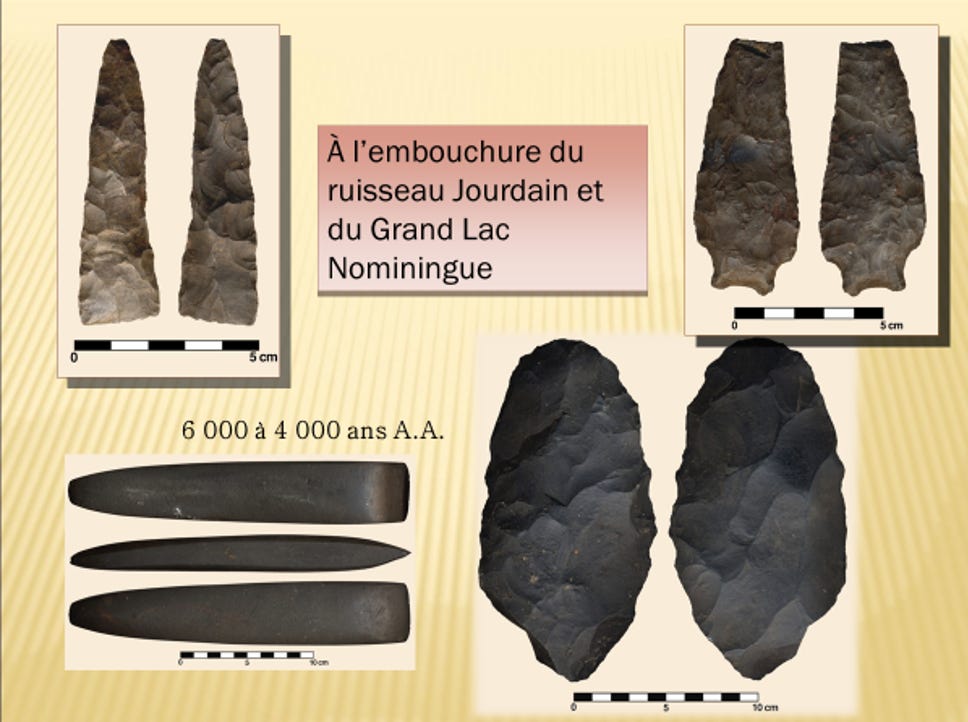
Throughout this Indigenous civilization, according to Céline Carayon, author of Eloquence Embodied, the Turtle Islanders used a sign language that was understood regardless of the languages spoken throughout a good part of the Americas, observed from Brazil to the Laurentian Ice Sheet’s newly settled forests. Coupled with that sign language was their concept described as moieties. This was a social construct that allowed people to know each other through their moiety. As the name suggests, the society was a human artifact understood to be divided into two halves, and everyone belonged to one or the other moiety, declaring through this acceptance that they understood there were local rules that had to be learned and respected. People travelling would be welcomed by other members of their moiety and therefore were never fully strangers. It was understood through the moiety concept that they would adapt to the local rules that had evolved to avoid intermarriage. The moiety understanding, coupled with the gift culture and sign language would lead to expectations of a certain civility and encourage peaceful exchanges that could lead to advantageous gift exchanges between the visitors’ people and their hosts. One of these gifts was a polished ceremonial axe carved from blue stone that was found in an excavation near Lac Nominingue and was dated as being from a time six thousand years ago. Could it have been presented as a gift from moiety members visiting there from the regions where that blue stone can be found?
As a keystone species, their forestry and farming methods were unrecognizable to early Europeans, and while one side expected a gift as a polite gesture from a visitor from far away, the other expected to find tightly protected monumental structures and armed defenders with weapons as sophisticated as those used to kill their enemies in Europe. On both continents the people moving north brought with them the cultures their ancestors knew. European culture was one of warring hierarchies while in the Americas, hierarchies were rare and seemed to implode a while after they formed, leaving societies that were based on concepts of a gift culture that the descendants of the European still struggle to understand.
Do not hesitate to add your comments below. If you don’t have time to do more, please press ‘like.’